
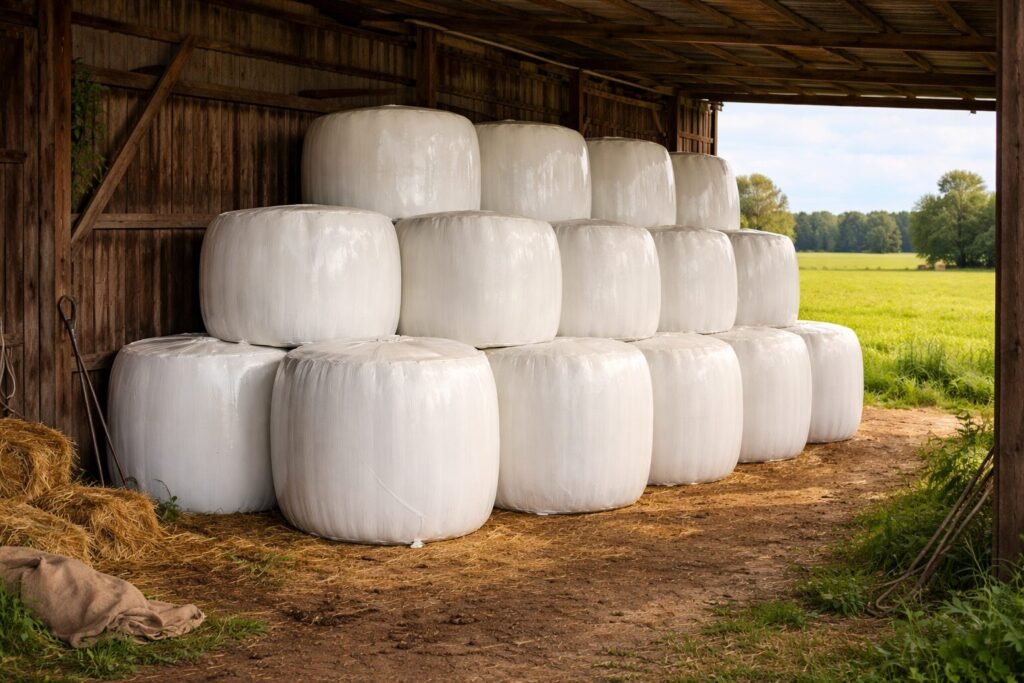
Hay rolls: Sizes, weights, wrapping, & market value explained
What are hay rolls? This guide explores their sizes, weights, dimensions, and pricing. Also, discover the right packaging strategies to protect your profit margins.
Preface
Do you know that a hay roll can lose value before it ever meets a buyer? Yes, small issues such as uneven shape, soft edges, and moisture damage can quickly turn into slow sales or rejections. As a seller or farmer, surely you know hay rolls are inventory. Many produce good hay but overlook what protects its value after baling. This guide explains how your hay roll size, weight, and especially wrapping decide whether they can be sold at full price or quietly lose value in storage and transport.
What are hay rolls?
Hay rolls are large, dense, cylindrical bundles of dried hay produced by round balers. They serve as a primary feed source for ruminant animals, such as cattle and horses. Usually, they are made from grasses, legumes, or mixed forage crops.
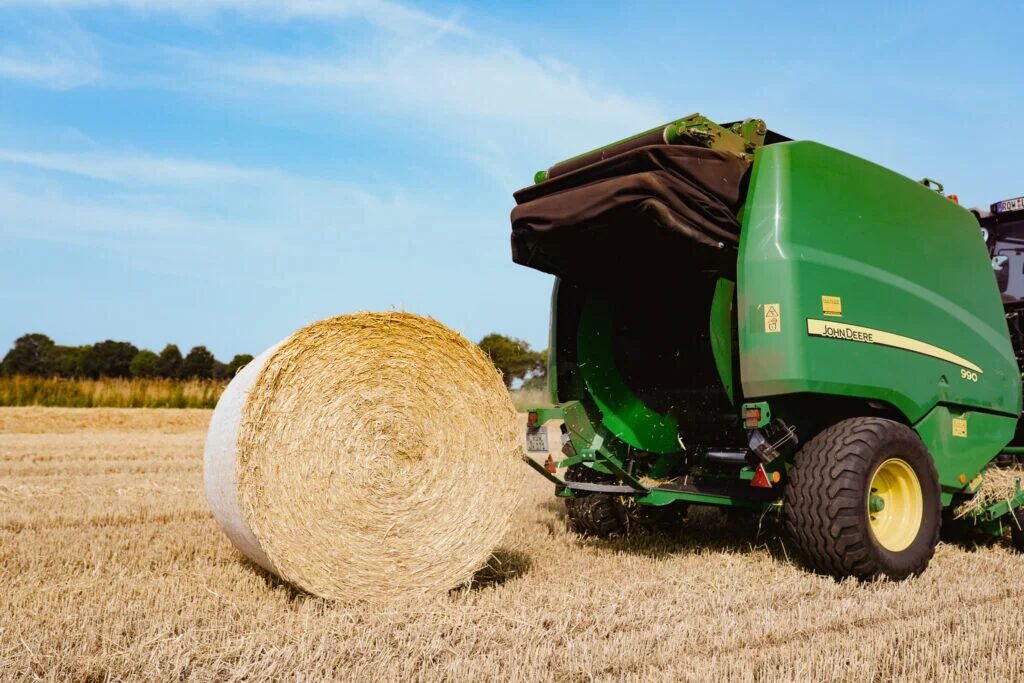
The baler machine gathers cut hay, rolls it tightly into a uniform shape, and secures it with twine, net wrap, or plastic film. Compared with small square bales, hay rolls are built for commercial farming. They reduce handling, improve storage efficiency, and align with mechanized systems. That is why the term “hay roll” is widely used in large-scale production and trade.
Why do sellers and farmers roll up hay?
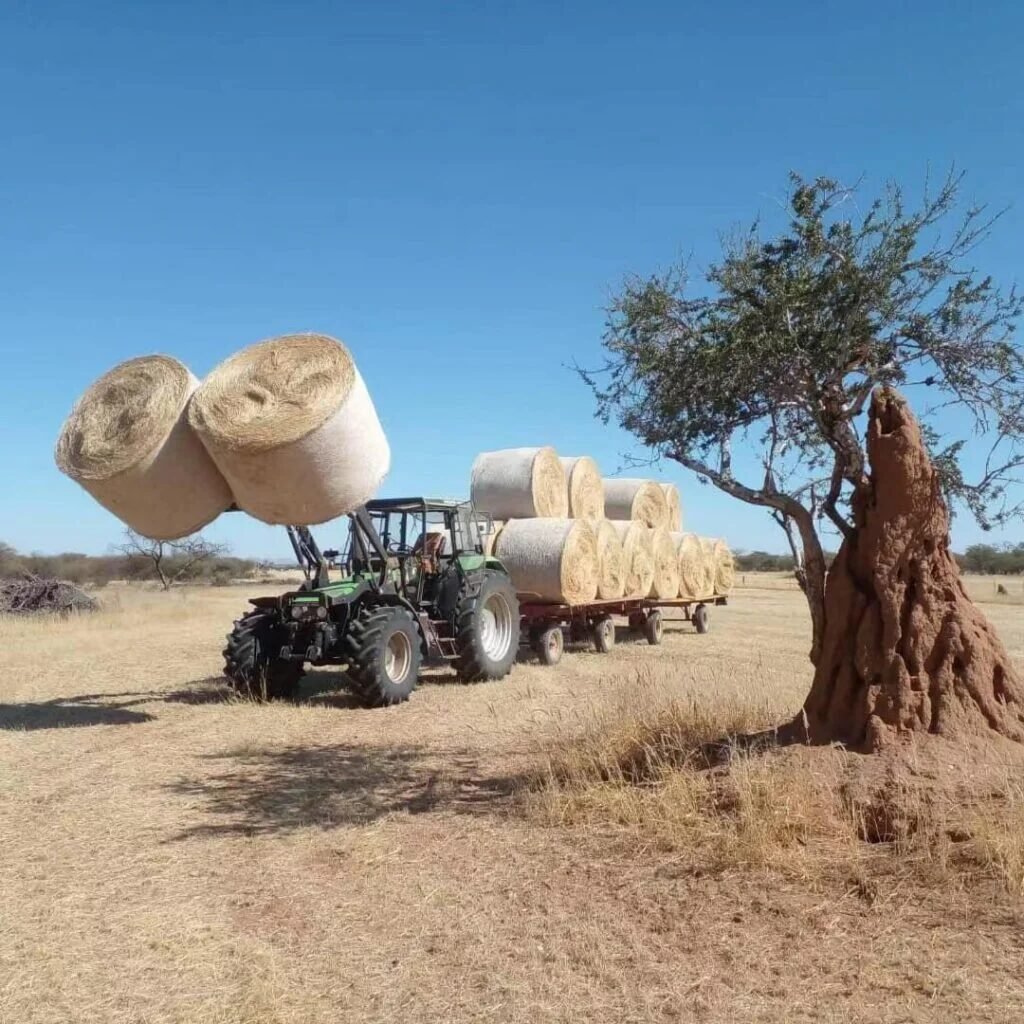
Rolling hay is primarily about reducing friction across the entire supply chain. It solves several operational challenges, such as:
- Efficiency at scale: Fewer units per tonne means faster handling and lower labour input from field to storage.
- Storage flexibility: When wrapped correctly, hay rolls can be stored outdoors, reducing pressure and over-reliance on sheds and covered space.
- Transport economics: Uniform cylindrical shapes stack and move more reliably than mixed bale formats.
- Market expectations: Many hay buyers, particularly in large quantities, prefer rolls because they are easier to inspect, count, and price consistently.
What is a roll of hay called?
A roll of hay goes by several names, including hay roll, large hay bales, and round bales. These names usually depend heavily on region and context. For example, in Australia, hay rolls and round bales are widely used in listings and contracts. Across Europe, the term round bale is dominant, especially in export and cooperative trade. Clarity is key for tenders, documentation, and invoices. It avoids disputes, simplifies paperwork, and supports cleaner pricing negotiations across borders.
Standard weight, size, and dimension of hay rolls
Consistency builds buyer trust. Hay roll size and weight vary based on forage type, moisture content, and baler equipment settings. Sellers who control these variables can effectively avoid pricing disputes and improve repeat business.
| Diameter | Width | Typical weight range | Common applications |
| 1.2m-1.3m | 1.2-1.25m | 350-500kg | Small to mid-scale operations, short storage |
| 1.4m-1.5m | 1.2-1.25m | 500-650kg | Standard commercial trade |
| 1.6m-1.8m | 1.2-1.25m | 650-850kg | High-volume farms, long-term storage |
How are hay rolls made?
While the basic process is familiar to most hay roll producers, each production step influences shelf life, appearance, and sale price. Follow these key steps to ensure quality and consistency:
Step 1: Harvesting and forage timing
The first step is to cut the hay and leave it to dry until it reaches the correct moisture level. Here, timing is critical. If it is too wet, the risk of mold and spoilage increases. If it is too dry, the leaves could shatter, reducing nutritional and commercial value.
Step 2: Baling into dense cylinders
Next, compress the forage into uniform cylinders using modern round balers. Density matters for storage and transport. Loose rolls deform easily and trap air. Dense rolls shed water better and maintain their shape. Buyers associate firm, uniform rolls with professional production.
Step 3: Wrapping and securing the hay roll
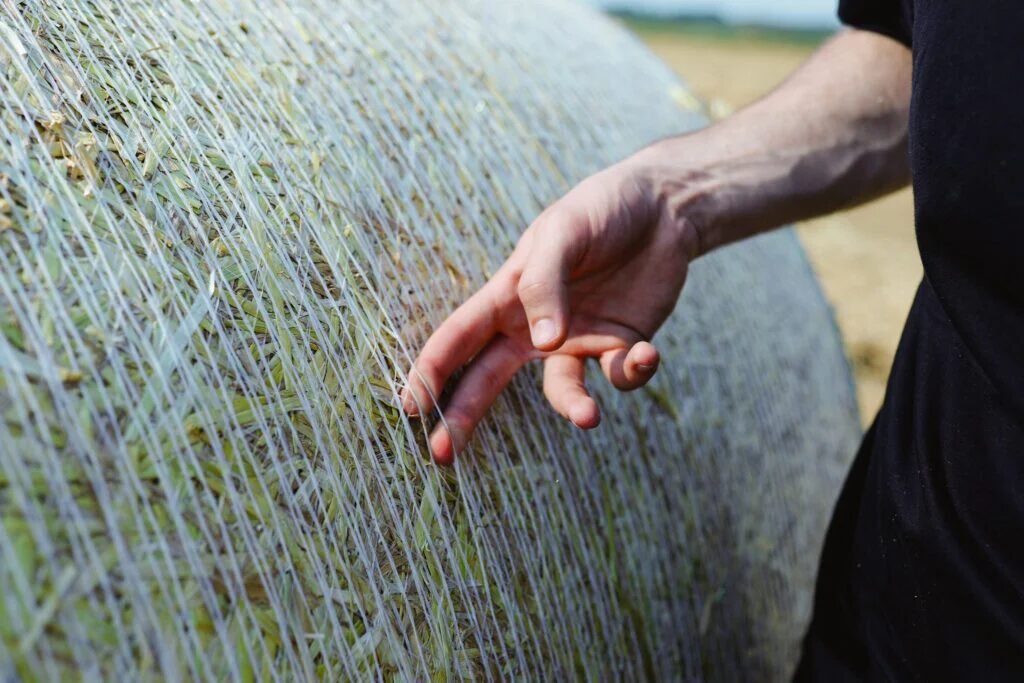
Once formed, the roll must be secured. Traditional twine is still used, but net wrap has become the standard in commercial operations. Net wrap covers more surface area, holds edges firmly, and preserves roll shape far better during storage and handling. This step directly impacts how the hay roll looks, lasts, and sells.
What drives the prices of hay rolls for sale?
Hay roll prices shift with seasons and weather. Drought conditions raise prices. Strong harvest years soften them. Beyond market forces, sellers control several value drivers, such as:
- Crop quality: Clean, leaf-rich hay commands premium pricing. Dust, weeds, and discoloration lower buyer confidence.
- Weight and density consistency: Most buyers prefer predictable hay roll weights. Inconsistent density raises transport issues and pricing disputes.
- Seasonal supply and demand: Well-stored hay sells strongest when supply tightens. Sellers with stable inventory gain leverage.
- Storage conditions: Hay is stored indoors or outdoors. If you store it outside without proper protection, the risk of loss increases. Visible damage reduces the price quickly.
- Wrapping and packaging quality: Poor wrapping leads to roll edges breakdown, moisture ingress, and deformation. Buyers discount damaged rolls without hesitation.
It’s easy to tell that hay roll packaging influences nearly every pricing factor above, yet in reality, it often receives the least attention. Your wrapping solution quietly decides whether your hay holds its value or leaks it away.
How does net wrap affect your hay roll quality and sale value?
In hay-selling operations, net wrap is the structural protection that determines how a roll of hay performs in real conditions. It offers:
- Edge-to-edge protection: Full surface coverage keeps edges tight and prevents fraying, helping rolls maintain shape during storage and handling while reducing dry matter loss from exposed forage.
- Weather resistance: Tightly wrapped rolls shed rainfall more effectively, slowing moisture penetration and reducing the risk of internal spoilage during outdoor storage across variable climates.
- Reduced spoilage: Proper net wrap limits trapped air inside the roll, slowing mold growth and preserving more usable hay for sale rather than waste.
- Transport durability: A strong net wrap holds hay rolls together during stacking, loading, and long-distance hauling. This reduces deformation and damage that trigger buyer complaints.
- Visual consistency: Uniform, well-wrapped rolls present professionally, sell faster, and support higher asking prices by signaling controlled production and reliable quality.
What is the best net wrap for hay rolls? XES Bale Nets
Knowing the dimensions and weights of your hay roll is only half the battle. To ensure your inventory actually meets those standards, you need the right protection. XES Bale Net Rolls are engineered to bridge the gap between hay production and profit. With 20+ years of field experience, our lineup is designed to handle the specific stressors of commercial hay operations. They are crucial for high-speed baling and long-distance hauling.
a. XES® Classic: The reliable standard net wrap
The XES® Classic is the workhorse of the XES lineup. It is designed for farmers who need consistent, professional results without the need for extreme industrial specifications. It provides a clean, shelf-ready look that buyers trust.
- User benefit: It reduces operator headache by feeding smoothly through almost any round baler model without snagging or uneven tension.
- Performance: It offers full-width coverage, keeping each roll’s shoulders tight and preventing fraying that often leads to price discounts.
- Durability: It includes essential UV protection to ensure the net doesn’t become brittle if your sales cycle lasts a few months.
Best for: Small to mid-scale farms and indoor or short-term outdoor storage.
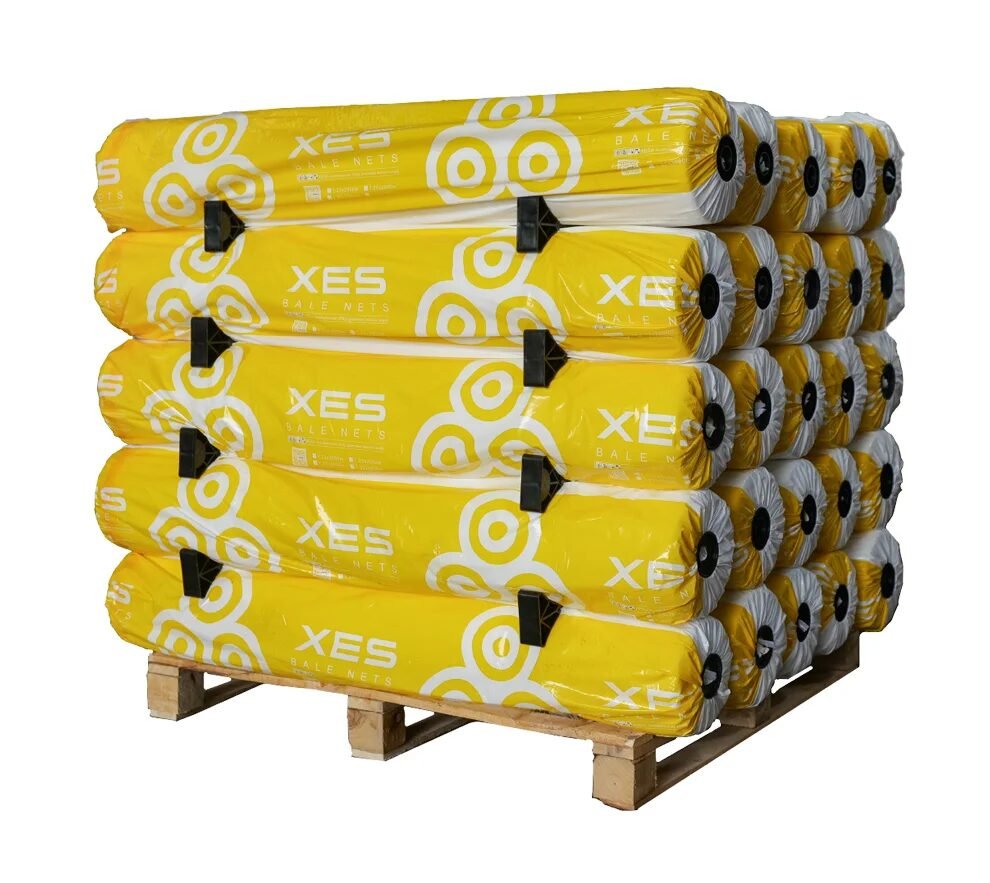
b. XES® Extreme: The heavy-duty protector net wrap
When your hay rolls are destined for the back of a flatbed truck or an exposed field in a rainy climate, the XES® Extreme is the necessary choice. This net is built with a reinforced thread structure designed to survive high-tension environments.
- User benefit: Virtually eliminates roll burst during transport. The high tensile strength holds even the densest, heaviest rolls together through multiple loading and unloading cycles.
- Performance: Features superior tear resistance. If a roll is dragged or bumped during stacking, the reinforced weave prevents small nicks from turning into a total wrap failure.
- Durability: Maximum UV stability for hay that needs to sit outdoors for an entire season while maintaining its structural integrity.
Best for: Dense crops such as silage or heavy grass, long-distance transport, and harsh outdoor conditions.
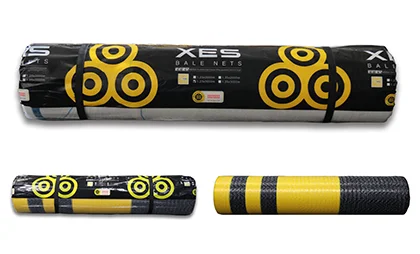
c. XES® Supreme: The efficiency champion net wrap
For operations where time is money, the XES® Supreme is engineered to maximize output. This isn’t just about strength. It is about the physics of the roll. It provides more footage per roll, meaning your baler stays in the field longer and spends less time in the shop for changeovers.
- User benefit: Dramatically reduces downtime. With extended roll lengths, operators can wrap significantly more hay rolls per day, increasing the ROI of the baling crew.
- Performance: The advanced thread design distributes pressure so evenly that you can achieve a tighter, denser roll with fewer baler rotations.
- Durability: Designed for scale. Every foot of the roll is guaranteed to be uniform, ensuring that the first hay roll of the day looks and weighs exactly the same as the rest.
Best for: High-volume commercial operations, cooperatives, and contract balers.
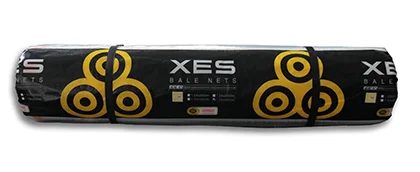
Why choose hay roll net wraps by XES
At XES Bale Nets, we don’t just sell plastic wraps. We sell high-quality net wraps that protect your margins. Choosing our nets will give you the following advantages:
- Stop the leakage: Every bit of hay that falls off a roll or rots in the rain is lost profit. Our edge-to-edge technology keeps your inventory intact.
- Professional grading: Buyers judge a book by its cover. A perfectly shaped, tightly wrapped XES roll signals to the buyer that the forage inside is of equally high quality.
- Universal compatibility: Our wraps are tested across major baler brands to ensure that when the harvest window opens, your equipment runs, not stalls.
FAQ
- How much does a hay roll weigh?
A standard hay roll usually weighs between 350 and 850 kilograms, about 770 to 1,870 pounds. The exact weight depends on bale diameter, forage type, moisture at baling, and compression settings. Dense, evenly wrapped rolls retain weight better during storage and transport, which is why many sellers rely on XES Bale Nets.
- What is the average hay roll price?
Hay roll prices vary by season, region, and quality. For instance, in Australia, prices commonly range from AUD 60 to AUD 140 per roll. In Europe, prices often fall between €50 and €120 per hay roll. Well-shaped, properly wrapped rolls consistently achieve higher prices, especially when protected with XES Bale Nets.
- Why are hay rolls preferred over square bales in commercial farming?
Hay rolls reduce labor, speed up handling, and align better with mechanized equipment. They lower the cost per ton moved and stored, making them ideal for farms and cooperatives selling at scale. Reliable net wrapping, such as XES Bale Nets, helps maintain roll integrity across the supply chain.
- How many hay rolls can be stored outdoors safely?
There is no fixed limit. It mostly depends on the harvest and space availability. You can make outdoor hay storage safe when rolls are dense, well-drained, and fully wrapped. Poor wrapping quickly leads to moisture damage and losses. High-quality net wrap, like XES Supreme Nets, is critical for protecting outdoor-stored inventory.
- How does hay roll end-use affect selling price and handling requirements?
Feed-grade hay rolls demand tighter wrapping, cleaner appearance, and consistent density, while non-feed uses allow lower standards. Rolls prepared for premium markets earn more when their shape and surface stay intact. For that reason, strong wrapping from XES Bale Nets helps achieve this.
- How many small bales of hay equal one hay roll?
One standard hay roll equals roughly 15 to 25 small square bales, depending on roll size and density. Maintaining that equivalent value depends on preventing spoilage and deformation, a role well-served by durable net wrap from XES Bale Nets.
- What is the difference between a bale and a roll?
A bale usually refers to small rectangular units handled manually, while a roll refers to large round bales designed for machinery. Rolls dominate commercial hay sales because they move and store more efficiently when secured with net wrap, such as XES Bale Nets.
- Do hay rolls vary by country or region?
Yes, hay roll sizes and weights vary across regions due to equipment standards, climate, and buyer expectations. Consistent wrapping helps sellers meet regional specifications and export requirements, which is why many operations standardize on XES Bale Nets.
Conclusion
Hay rolls don’t fail overnight. They fail quietly through poor shape, moisture damage, and lost buyer confidence. Size and weight matter, but wrapping determines whether those qualities survive storage and transport. For farmers and cooperatives selling hay at scale, net wrap is a pricing tool. Choose it with the same care as forage, timing, and equipment. Protect the roll, and the market value follows. Explore XES Bale Nets to safeguard your hay rolls from field to final sale.