
How much is a bale of straw? A complete guide for farmers, buyers, and sellers
How much is a bale of straw? Learn real prices, key cost factors, and packaging tips. Protect your margins and get consistent quality with every bale you sell.
Preface
Straw prices can swing fast. One wet harvest, one diesel spike, or one inconsistent baler setting, and suddenly your “cheap” straw is eating your profit! If you have ever asked why one bale sells for €3 and another for €30, you are in the right place. This comprehensive guide explains how pricing works, what drives costs, and how to package straw bales to retain their value.
What is a straw bale?
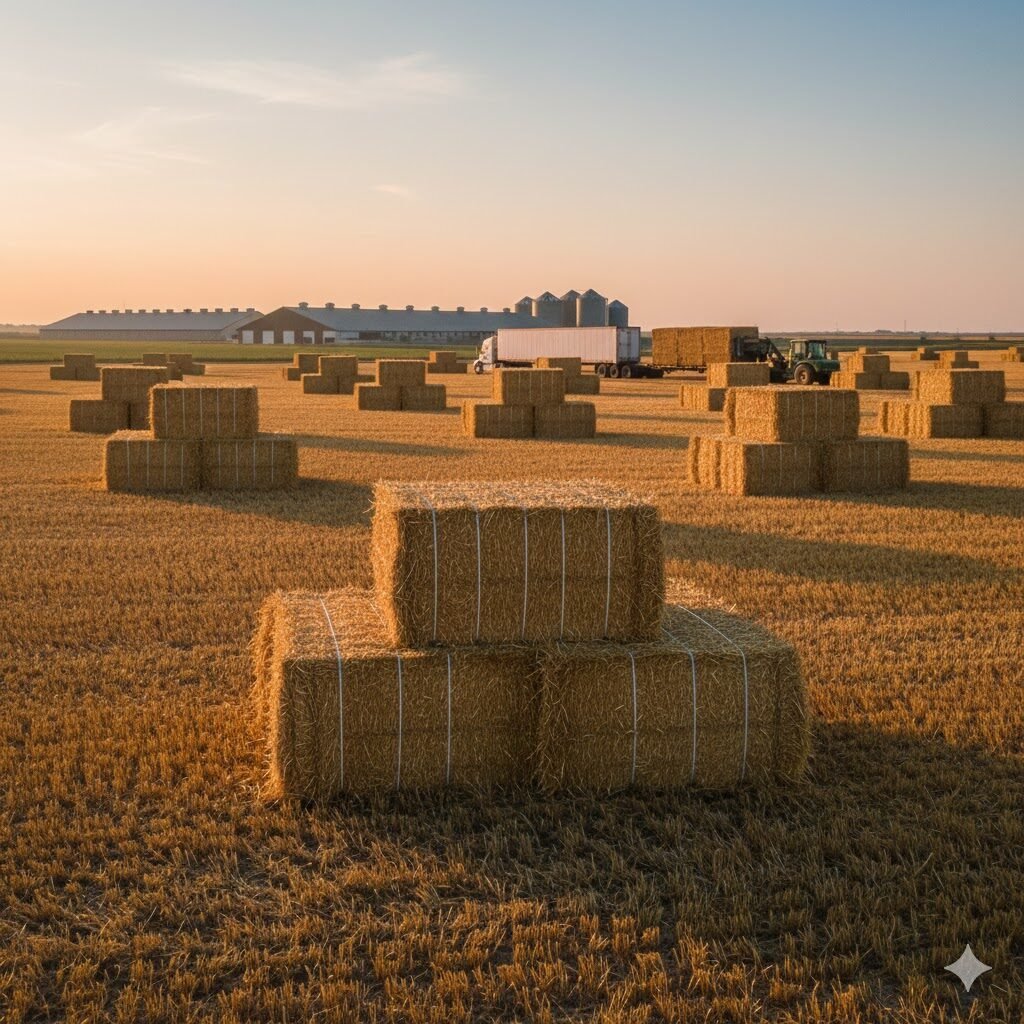
A straw bale is a compressed stack of dry stalks and stems from grains like wheat, barley, oats, or rye. Dozens of flakes form a single bale, packed into 2-string, 3-string, round, or large square formats. Depending on size, weight ranges run from 12 kg to more than 550 kg. Straw is mainly used for bedding, garden mulch, erosion control, and construction.
How much is a bale of straw?
Straw prices depend on bale size, region, density, season, and packaging. Below are realistic ranges for the European and Australian markets.
- 2-string straw bale price: €2.50-€5.50 / AU$4-$8 per bale
Small bales (12-22 kg) are cheap, hand-liftable, and easy to transport. Gardeners, hobby farms, and stable owners buy them for bedding and mulch. The handling cost per tonne is high because every bale is handled manually.
- 3-string straw bale price: €6-€10 / AU$8-$14 per bale
Heavier 25-40 kg bales cost more thanks to higher volume and better density. They are popular in commercial stables, larger farms, and landscapers who want more straw per bale with reduced handling time.
- Round straw bale price: €20-€40 / AU$30-$60 per bale
Round bales are cheaper per tonne and ideal for large buyers like feedlots, dairy farms, mushroom farms, and contractors. Prices vary by diameter, density, and net wrap quality.
- Square straw bale price: €35-€70+ / AU$50-$90+ per bale
Large squares command higher prices due to excellent stacking, export suitability, and uniform density. Commercial growers, exporters, and large-scale operations frequently prefer them for truck efficiency and loading precision.

What factors influence straw bale prices?
A number of variables push prices up or down. Each factor below plays a direct role, and every straw bale seller must track:
#Bale size
Different sizes carry different production and handling costs. 2-string bales require more labor per tonne. 3-string and round bales improve efficiency. Large squares deliver the best transport value but cost more to produce because of larger equipment.
#Crop type
Wheat straw is usually the baseline price. Barley straw is softer and may cost slightly more for bedding. Oat straw can be bulkier, adding handling value. Each crop gives a different texture, density, and buyer preference.
#Moisture content
Wet straw weighs more and increases spoilage risk. Buyers pay less for high-moisture bales, and sellers often discount them to avoid disputes. Dry, well-cured straw always earns a premium.
#Regional supply and weather conditions
EU markets swing with long wet periods, creating shortages and higher pricing. Australia faces drought cycles and heat waves, also pushing prices up. When harvest conditions are ideal, prices drop sharply.
#Harvest season timing
Fresh post-harvest straw is cheapest. Prices rise through winter as availability declines. Sellers storing large volumes may charge premiums for clean, mold-free stock.
#Fuel and transport costs
Transport represents 20-40% of the total bale cost. Diesel spikes raise per-tonne prices fast, especially for long-distance buyers in remote AU regions.
#Density of the bale
Tighter, heavier bales reduce transport cost per tonne. High-density bales generally sell for more because they pack better and lose less material.
#Packaging method (twine vs net wrap)
Twine is the cheaper option but creates looser bales. Net wrap costs slightly more but produces cleaner edges, better stacking, and less chaff loss, raising final value per bale.
#Market demand
Construction, mushroom farms, landscapers, and bedding markets dramatically affect seasonal demand. High-demand months raise prices noticeably.
How does bale packaging affect the prices and storage of straw bales?
Packaging directly affects resale value, waste, and transport efficiency. Twine is the traditional choice. It is cheap, simple, and adequate for many straw applications. However, it creates looser bales, uneven edges, and higher chaff loss during long transport.
Net wrap, on the other hand, delivers tighter compression, cleaner edges, and more consistent dimensions. This leads to better stacking, less waste, and lower handling losses, all benefits that often outweigh the slightly higher cost.
Net wrap becomes especially worth it when:
- Bales are transported long distances
- Outdoor storage is unavoidable
- Buyers require consistent commercial quality
- Bales are destined for export or high-volume stacking
Best wrapping solutions for commercial straw bale operations
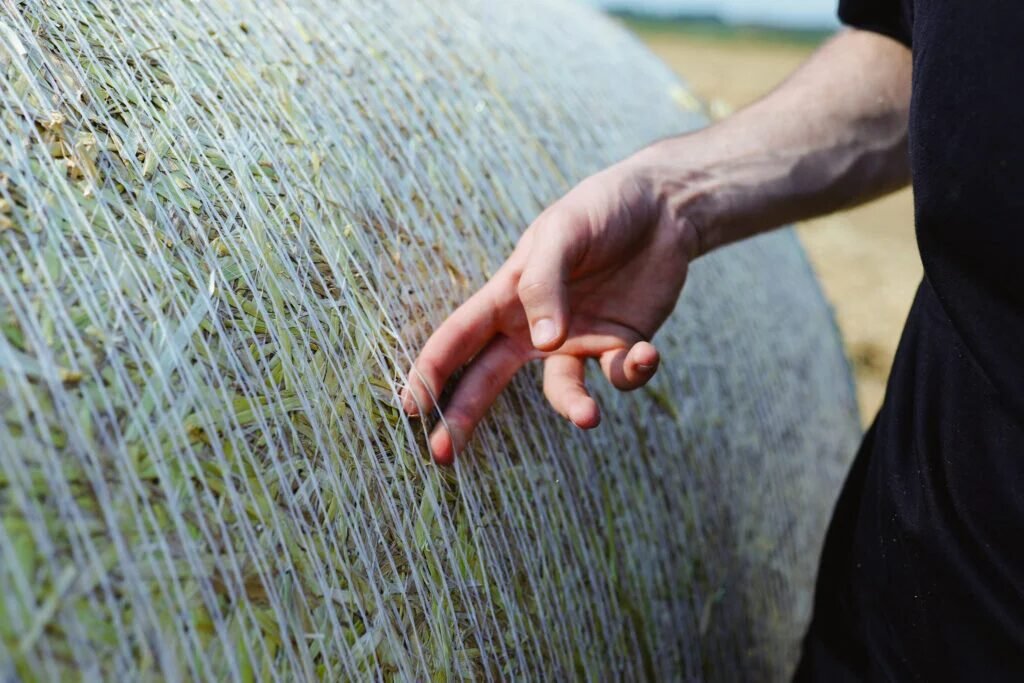
Have straw bales ever slumped during transport or arrived looking nothing like when they left the farm? That’s exactly why XES Bale Net exists. With years of manufacturing expertise, our nets help farmers keep bales tight, uniform, and protected. Below are the best options for straw sellers looking for reliability and consistency.
XES Bale Net Wrap Classic
The XES Classic net wrap is a dependable, everyday net that works across most balers. It grips cleanly, keeps edges tight, and reduces mess during handling. Sellers choose it because it improves bale shape, reduces chaff loss, and keeps loads stable in storage and transport.
Key features
- Reliable edge coverage
Provides a full-width hold that maintains bale shape and reduces material loss during stacking, especially in operations that load multiple times per day. - Smooth roll release
Ensures net flows evenly through the baler, reducing machine strain and helping operators maintain a steady pace even in dry, brittle straw conditions. - Moderate UV stability
Protects bales stored outdoors for medium durations, preventing wrap breakdown and helping maintain bale integrity through seasonal storage cycles. - Consistent roll length
Gives operators predictable output, reducing downtime and minimizing wasted time reloading rolls during busy harvest periods. - Versatile performance
Compatible with most standard balers, handling mixed straw types with consistent compression and dependable wrap application.
XES Bale Net Wrap Extreme
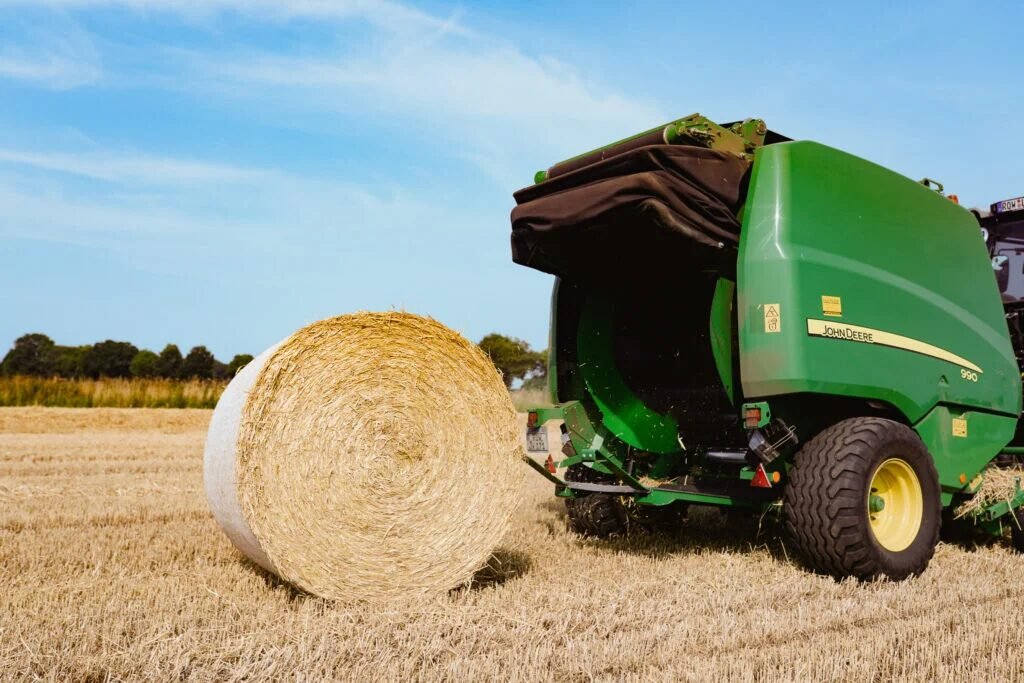
Are you handling dense straw? Long storage? Rough transport routes? The XES Extreme net wrap steps in when Classic isn’t quite enough. It is built for tougher balers, hotter climates, and higher-density compression. If your straw loads get handled multiple times, this top-quality net wrap keeps everything tight.
Key features
- High tensile strength
Maintains bale stability under heavy tension, ensuring dense, tightly packed straw stays compact through stacking and long transport. - Maximum UV protection
Engineered for prolonged outdoor exposure, preventing wrap degradation when bales sit outside during high-sun storage periods. - Fast netting cycles
Reduces baler revolutions per bale, saving crucial time during peak harvest and improving output on demanding workdays. - Superior tear resistance
Designed to withstand tough straw, sharp edges, and uneven windrows without tearing under stress or friction. - Edge-to-edge coverage
Guarantees full-width wrapping, improving stack stability, and ensuring every bale maintains uniform dimensions in storage.
XES Bale Net Wrap Supreme
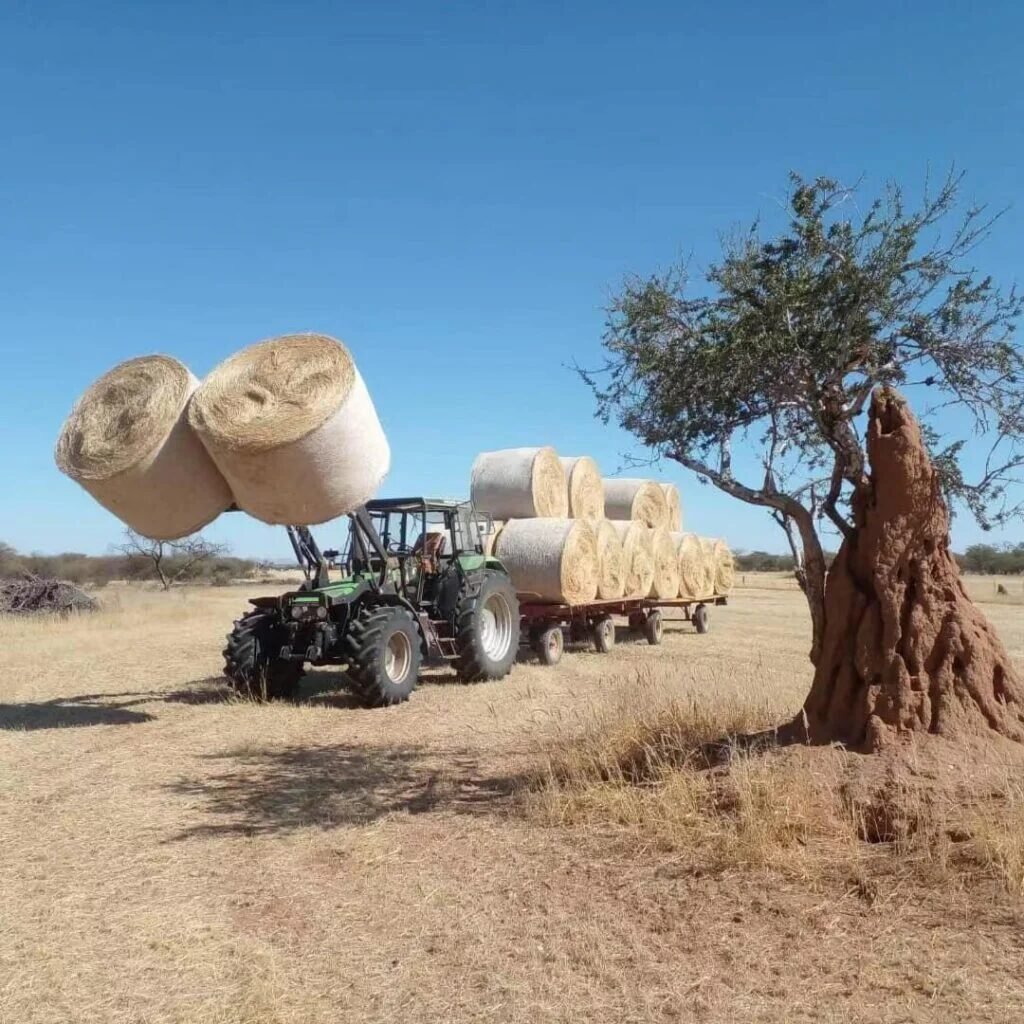
XES Supreme net wrap is the top-tier choice for operators who need maximum durability and export-level consistency. High-value straw loads, commercial dairy suppliers, and industrial buyers rely on it when every bale must arrive in perfect condition.
Key features
- Ultra-high density support
Keeps tightly compacted bales from expanding or deforming, ensuring perfect stacking and long-distance haulage reliability. - Advanced UV formulation
Built for extended wear in harsh climates, guarding against sunlight damage during months of outdoor storage. - Reduced wrap count
Provides a stronger hold with fewer layers, saving material, increasing efficiency, and lowering total packaging costs per bale. - Extreme tear resistance
Handles tough crops and variable windrows without failures, supporting consistent wrapping in demanding harvest conditions. - Precision edge sealing
Ensures surface tension stays even across the bale, protecting the bale structure during loading, transport, and storage.
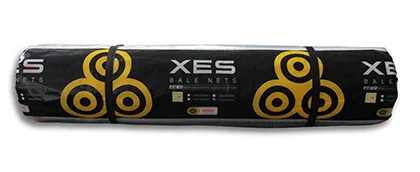
Why choose XES net wrapping for straw bales
XES bale nets give sellers tighter bales, cleaner edges, and fewer complaints, while protecting margins in both wet European seasons and harsh Australian heat.
- UV-resistant: XES nets are built to withstand strong sunlight and long outdoor storage, preserving net integrity and reducing bale breakdown.
- Edge-to-edge strength: The nets provide complete coverage, stabilizing the bale structure and preventing chaff loss during handling and transport.
- Fewer wraps: High strength allows fewer revolutions per bale, reducing material use and saving time during baling.
- Lower chaff loss: Tighter compression helps retain fine particles, improving bale cleanliness and overall value.
- Consistent bale shape: Keeps bales uniform, improving stacking, truck loading efficiency, and customer satisfaction.
- Ideal for long transport: The nets prevent shifting, expansion, and bale failure on long hauls, whether by truck or container.
- Trusted in EU and AU climates: XES bale net wraps are engineered to perform reliably in both wet European seasons and extreme Australian heat.
FAQ
- How much straw is in a bale?
A bale of straw typically contains between 0.03 m³ and 1.2 m³ of compacted stems and stalks, depending on size and density. Smaller bales hold tightly packed flakes, while large squares contain significantly more volume. Bale density, baler settings, and crop type also influence total material. If you want each bale to keep its full volume, using a strong net wrap like XES Bale Net Classic Wrap helps maintain compression.
- How much does a bale of straw weigh?
A straw bale generally weighs 12 to 550+ kg, depending on bale type, crop, and moisture level. Small 2-string bales sit at the lowest end, while large squares can exceed 500 kg. Wetter, looser, or low-density straw weighs less. For consistent straw bale weight, a high-quality wrap such as XES Extreme Net helps maintain uniform density.
- What is the price of a straw bale?
Straw bales typically cost €2.50-€70+ or AU$4-$90+, depending on size, season, and region. Small 2-string bales sit at the lower end, while large squares and high-density bales command higher prices. Packaging quality also affects value. Net-wrapped bales using XES nets generally retain shape better and earn higher resale prices.
- Why does straw price change during the year?
Straw prices fluctuate with seasonal supply, weather patterns, fuel costs, and market demand. During winter or drought periods, availability drops, leading to higher prices. Harvest months bring a cheaper, abundant supply. Well-packaged straw bales, especially those wrapped with XES net wraps, retain greater value through seasonal storage.
- Does a straw bale size affect price?
Yes, bale size directly affects price because larger straw bales require more material, higher density, and bigger equipment to produce. Small bales cost more per tonne due to labor, while round and large square bales offer better value. If you want better pricing from buyers who value consistency, use XES bale nets to uniformly wrap bales.
- What is the price of a large round straw bale?
Large round straw bales usually cost €20-€40 orAU$30- $60, depending on diameter, density, and storage conditions. Higher-density rounds command a higher price because they transport and stack more efficiently. For tighter, better-shaped straw bales that sell at the upper end of the market range, use reliable net wrap like the XES Extreme.
- How long can straw bales be stored?
Straw bales can be stored for several years if kept dry, off the ground, and well aerated. Straw resists spoilage better than hay, but long-term exposure to moisture will reduce quality. To ensure longer-lasting straw bales, always wrap them. Use XES UV-stable bale net wraps. They help maintain structure and longevity far better than twine-tied bales.
- Should straw be stored under cover?
Yes, straw stores best under cover, where it avoids long-term moisture and UV exposure. Outdoor storage is possible, but only with good drainage and strong wrapping to protect bale edges. Using UV-stable nets like XES Extreme significantly improves outdoor durability and reduces weathering losses.
- Is net wrap necessary for straw bales?
Net wrap isn’t always required, but it becomes essential for long-distance transport, outdoor storage, and commercial-grade consistency. Twine works for short-term use, but nets maintain shape and reduce chaff loss. Many sellers switch to XES bale net wraps to improve bale quality and reduce customer complaints.
- Does packaging affect straw bale pricing?
Yes, packaging directly impacts straw bale pricing because well-wrapped bales hold shape, reduce waste, and stack more efficiently. Twine reduces cost upfront but leads to greater losses in the long run. Net-wrapped bales, especially those using XES Classic, Extreme, or Supreme, deliver higher market value and lower handling costs.
Conclusion
Straw prices vary, but the rules behind them are predictable when you understand bale size, density, packaging, and market demand. With the right wrap, you reduce waste, maintain bale quality, and protect your profit margins. XES Bale Net Wrap delivers consistent compression, strong UV protection, and reliable performance for every bale you sell. Choose the wrap that matches your operation and stack your loads smarter.