
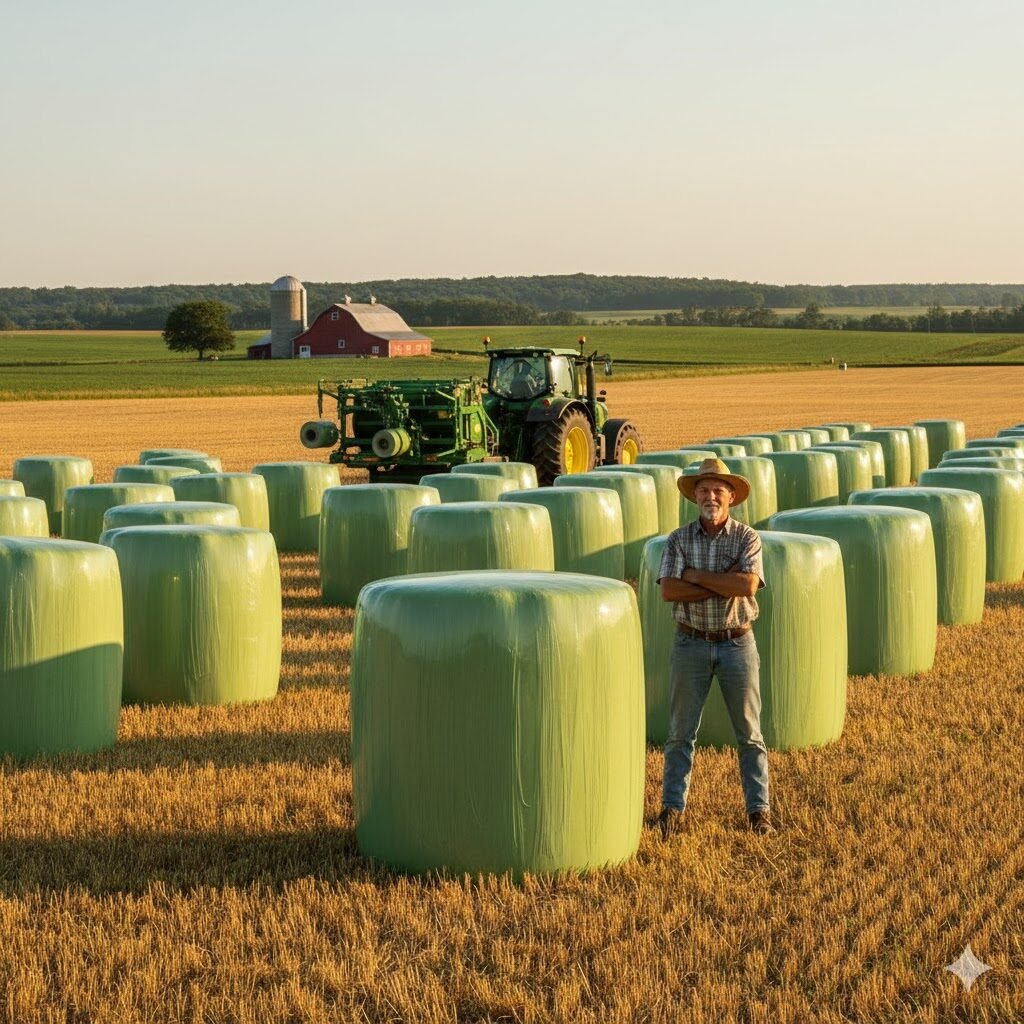
Straw bale dimensions: a breakdown for efficient straw handling & storage
Want to know the standard straw bale dimensions, sizes and weights? Here’s the answer. Also, discover how to use net wraps for consistent bales your customers trust.
Preface
Have you ever heard a buyer complain about uneven straw bales? Or a truck with wasted load space? Sure. A bale of straw looks simple until it comes time to stack it, move it, or load a full truck without wasting space. A few centimeters can be the difference between clean transport and a messy, unstable load. So, how do you ensure standard straw bale dimensions? Well, it is simple, and this guide provides the sizes, weights, and bale-handling rules. Let’s begin.
What is a straw bale?
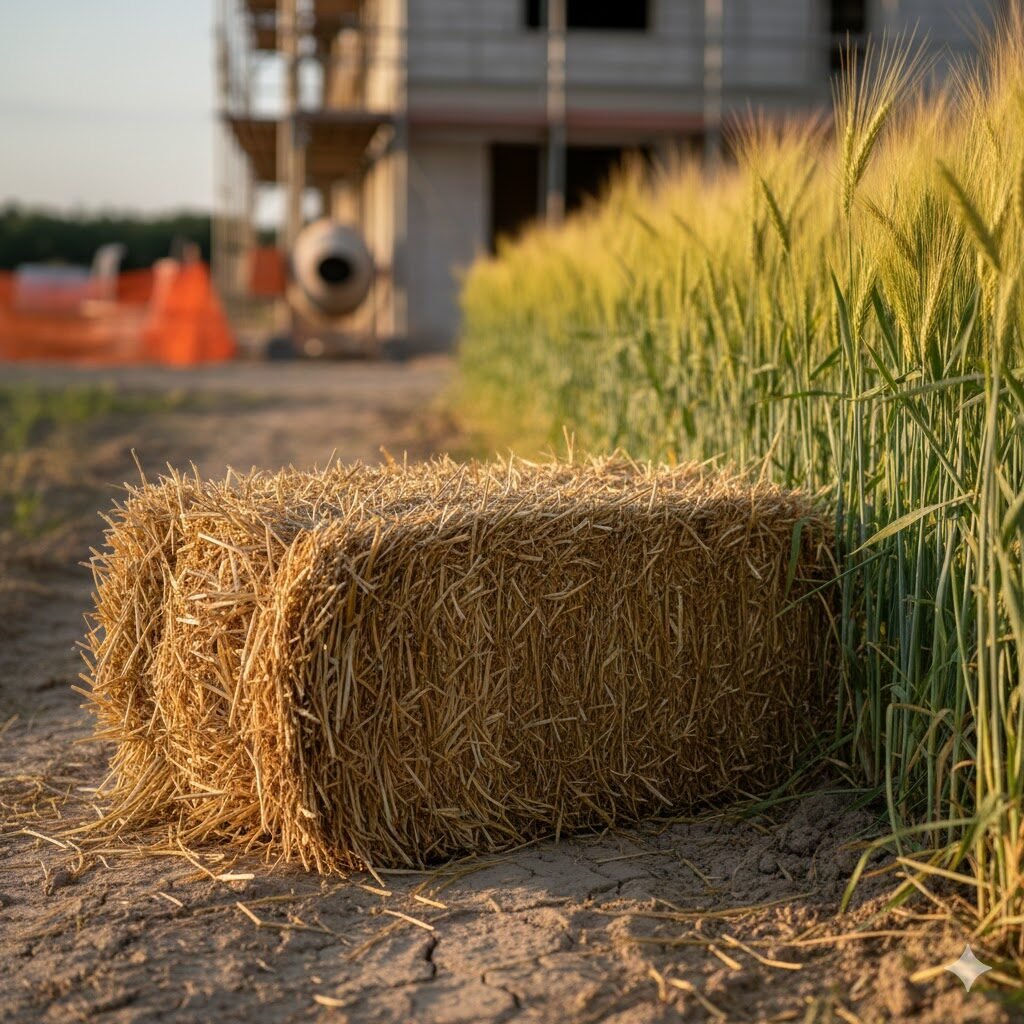
A straw bale is a compacted bundle of leftover grain stalks from crops like wheat, barley, oats, rye, or rice. Farmers compress the straw and bind it tightly using twine, wire, or string to create a uniform bale block. These straw bales have a variety of uses, from construction and insulation to erosion control, gardening, animal bedding, and even seasonal decorations. Simple material, surprisingly wide range of uses, and yes, size matters more than most people think.
What are the dimensions of a straw bale?
Straw bale dimensions have evolved with farming technology. In the 1960s, most farms relied on small hand-stacked bales, around 46 × 36 × 100 cm. The 1970s introduced large round balers, speeding up fieldwork and reducing manual labor. By the 1980s, large square balers became the new standard. They offered faster loading, cleaner stacking, and better compatibility with most buyers. Today, straw sellers use a mix of round bales, large square bales, and 2-string or 3-string small square bales. Each has its own dimensions, density, and ideal market, as shown below:
Round bales
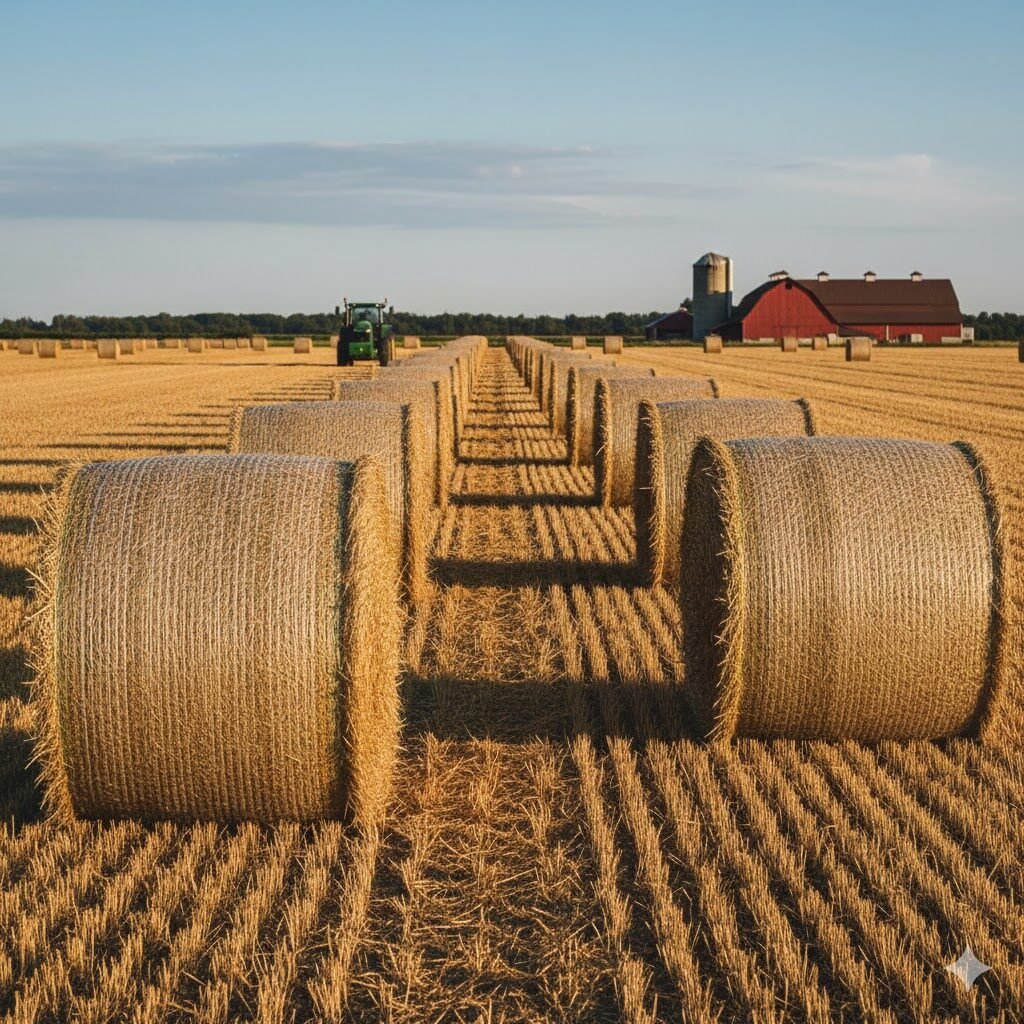
Round bales typically measure 120-180 cm in diameter with a 120 cm width. With an average density of 85 kg/m³ and weights commonly ranging from 200 to 300 kg, they are preferred by large livestock farms and contractors needing bulk bedding and efficient mechanical handling.
Hesston large square bales
Hesston bales measure approximately 130 cm high, 120 cm wide, and 220-260 cm long, with a medium density of around 135 kg/m³ and weights of 400-550 kg. They are popular with export operations, biomass facilities, and commercial dairies that need uniform, high-volume loads and stable stacking.
Krone high-density square bales
Krone bales measure approximately 90 × 120 × 220-260 cm, and are known for exceptional density, usually 190-230 kg/m³, with weights ranging from 400 to 600 kg. They are the preferred choice for buyers who need extremely firm, compact bales, including feedlots, power plants, and haulers that maximize payload efficiency.
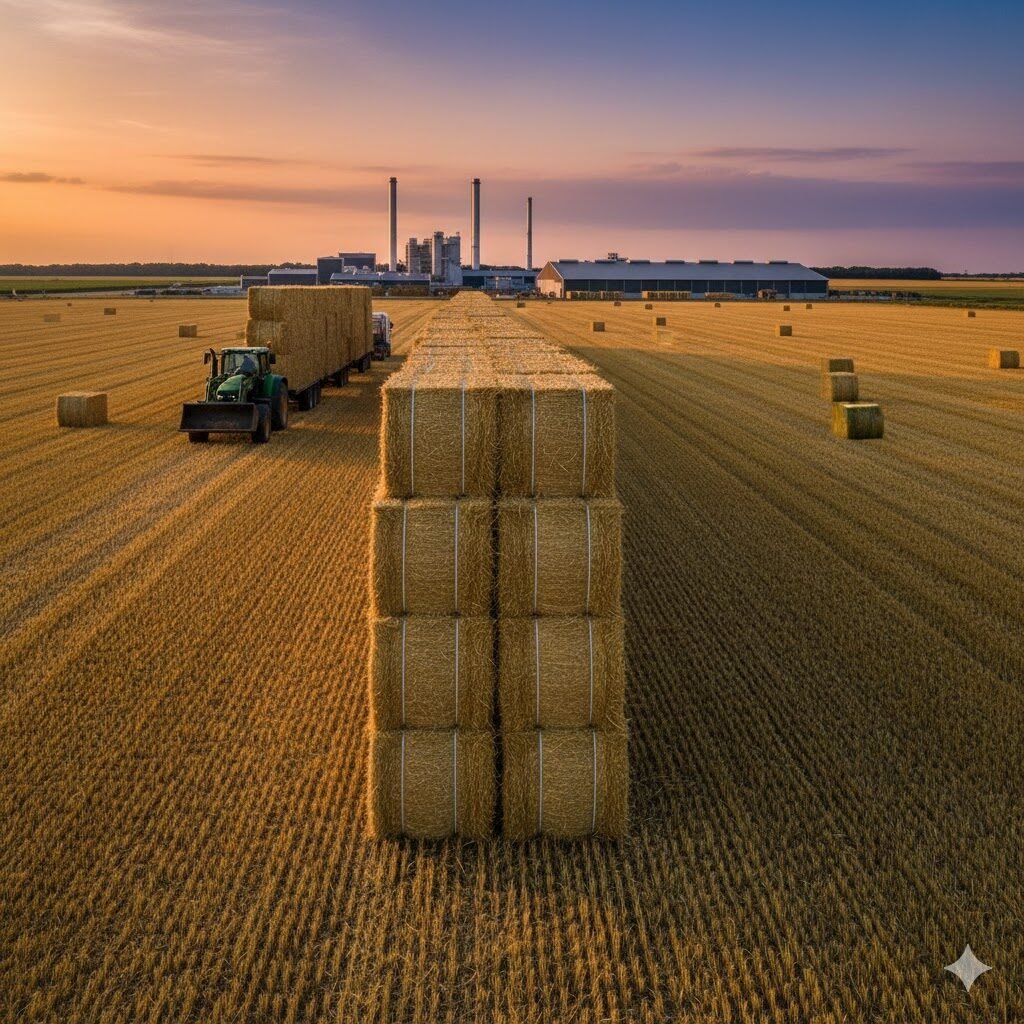
Claas square bales
Claas bales measure approximately 70 × 120 × 220-260 cm and strike a balance between manageable size and solid density. Typically weighing 275-350 kg at around 135-150 kg/m³, they are ideal for mixed farms and contractors who want efficient stacking with easier handling.
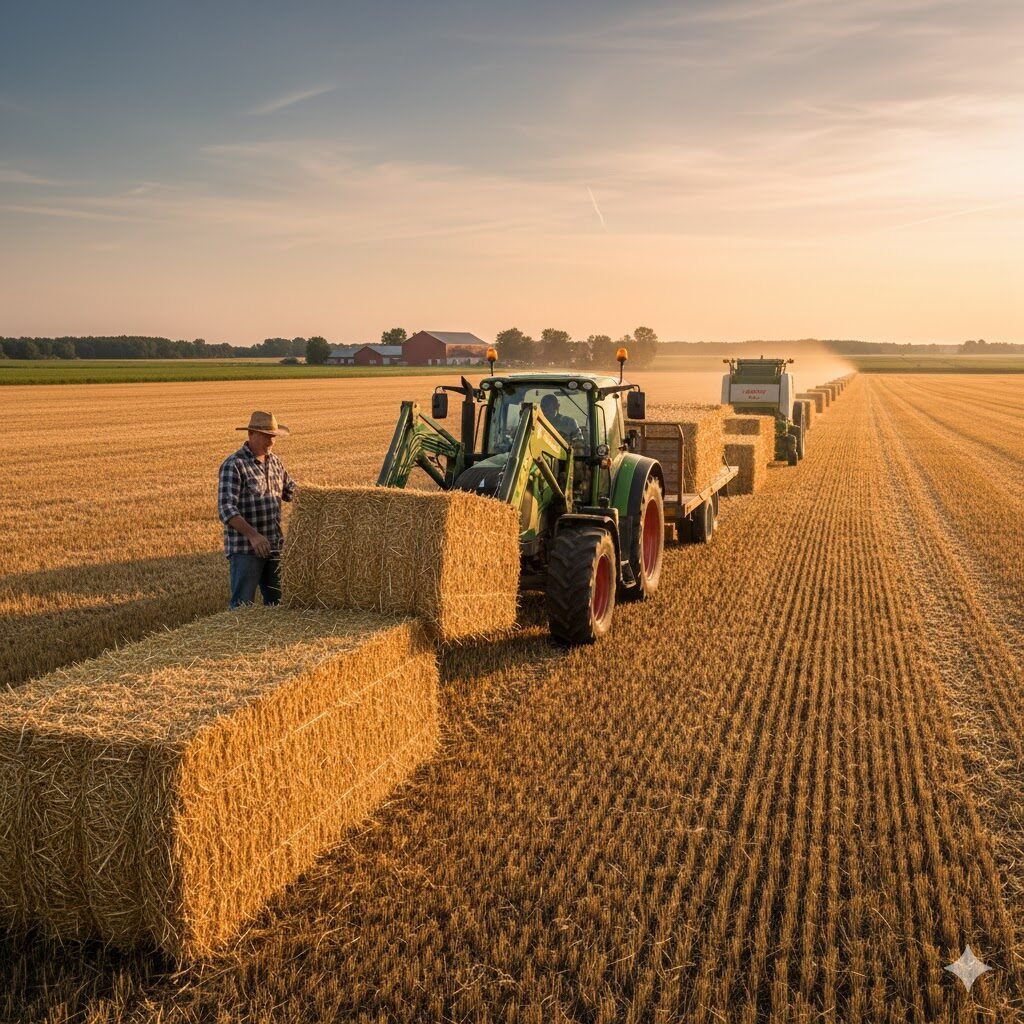
2-string small square bales
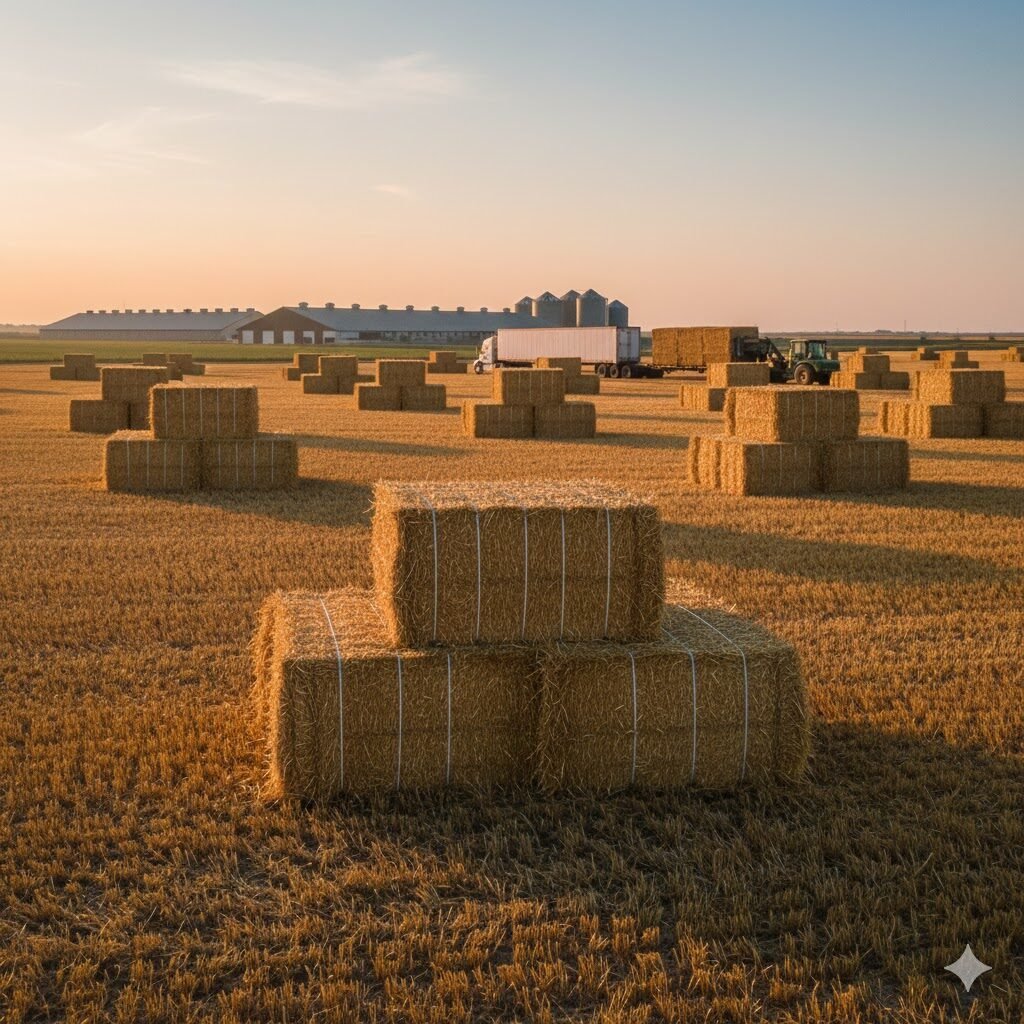
These small bales, roughly 35-40 cm high, 45-48 cm wide, and 90-100 cm long, usually weigh 15-25 kg and have a moderate density. They are preferred by horse owners, hobby farms, landscapers, and retailers who need consistent hand-liftable bales that stack neatly in smaller spaces.

3-string medium square bales
Three-string square bales measure around 38-40 cm high, 55-60 cm wide, and 115-122 cm long. Weighing 25-40 kg with higher density than 2-string bales, they work well for dairy farms, straw sellers, and contractors needing more volume per bale without sacrificing ease of stacking or loader handling.
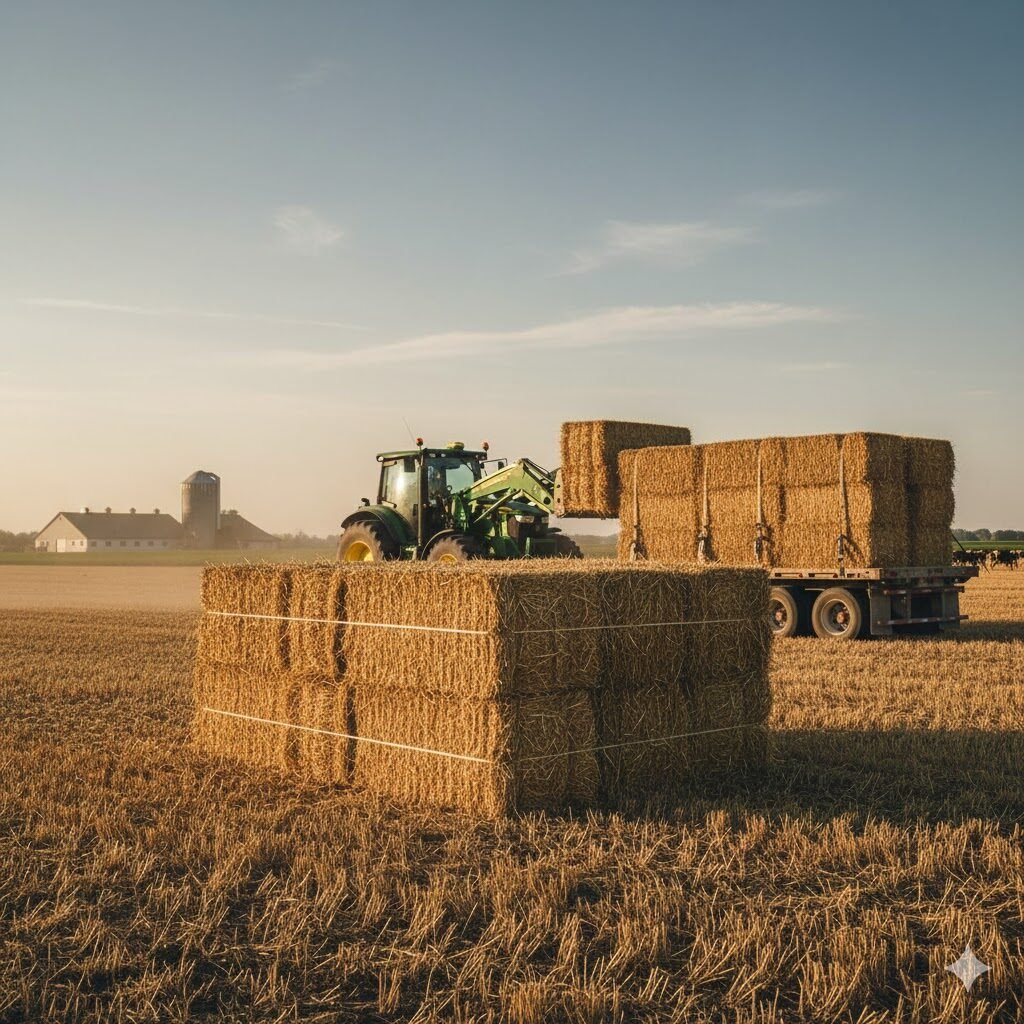
Why do straw bale dimensions matter? 10 Reasons explained
Straw bale dimensions affect nearly every step of handling and selling. That’s why serious straw sellers must nail measurements for smooth operations. Here’s what straw bale sizes impact:
- Stacking: uniform straw bales give stable, safe stacks
When bales match in size, stacks sit flat and steady. That reduces collapse risk, speeds loading, and keeps insurance claims down. Buyers also prefer neat pallets. Consistency means fewer surprises during stacking and moving.
- Storage: better space usage in barns and sheds
Standard dimensions let you plan barn layouts and max out shed space. Predictable sizes cut wasted gaps on racks or pallets. That means storing more bales under cover and fewer wet or damaged corners.
- Transport efficiency: more predictable truck loading
Know your bale footprint, and you can calculate exactly how many fit per trailer. That lowers transport costs and avoids half-empty loads. Better loading equals more profit per trip and less wasted fuel.
- Packaging: choosing net wrap, twine, or custom materials
Bale size affects the wrap you pick. Net wrap tightens and keeps edges clean. Twine is cheaper but looser. Choosing the right packaging keeps dimensions accurate and reduces chaff loss during handling and transit.
- Pricing and market value: size consistency builds trust
Buyers pay for predictable volumes. If your bales vary, buyers discount them or walk. Consistent sizes let you set stable prices, create bulk deals, and keep repeat customers who trust what they receive.
- Labor planning: easier handling reduces strain and time
When bales are uniform, workers lift and stack faster. You avoid surprises that slow crews down. Predictable sizes mean safer manual handling and smarter use of forklifts and loaders.
- Customer expectations: clients expect predictable sizes
Retailers, yards, and stables order by size. If your bales match expectations, you avoid returns and complaints. Clear specs make selling faster, and your phone rings less with awkward questions.
- Predictable supply: important for regular buyers
Supply contracts and plans rely on consistent bale sizes. When you deliver what you promised, customers keep ordering. That steadies your cash flow and simplifies seasonal planning.
- Reduced waste: consistent density reduces breakage
Even compression and the right wrap reduce rubbing and chaff loss. Less breakage means fewer rejected loads and less time sweeping up spilled straw at the yard or the buyer’s farm.
- Smoother communication: sellers can quote accurate volumes
Clear sizes make quoting and invoicing simpler. You can tell a buyer exactly how many bales per pallet or per truck. That saves time, avoids confusion, and cuts disputes.
How straw bale dimensions affect storage and transport
Correct straw bale dimensions don’t just make your barn look tidy. They also directly influence safety, loading speed, and hauling efficiency, as follows:
- Pallet fit: Standardized straw bale sizes make pallet stacking easier and reduce gaps. EU farmers often prioritize Euro-pallet compatibility, while Australian sellers plan for truck decking and wide-load stability.
- Truckload planning: Predictable dimensions help straw sellers calculate how many bales fit per load. EU transport limits height and axle weight, while Australia allows larger configurations for long-distance hauls.
- Barn capacity: Uniform straw bale height creates safer stacks and maximizes vertical storage. This is especially critical in humid EU barns and open-sided Australian sheds where airflow and stability differ.
- Stack stability and safety: Dense square bales create stable stacks that withstand humidity in Europe and strong crosswinds in Australia. Proper straw bale dimensions reduce shifting during storage and handling.

How to get the correct straw bale dimensions
Getting consistent bale dimensions isn’t luck. It takes the right baler settings, solid field prep, and a bit of discipline. Consistent sizes reduce stacking issues, speed up loading, and cut down on “Why is this one different?” calls from customers. Here are the core rules and tips to follow:
Step 1: Match the baler to your target bale size
Different balers are designed for different formats, such as 2-string, 3-string, large square, or round bales. Always choose equipment built to produce the dimensions your customers expect.
Step 2: Keep windrows uniform
Uneven windrows create uneven bale density. Keep rows smooth, evenly packed, and well-raked to avoid bales that bulge, twist, or shrink on one side.
Step 3: Monitor moisture levels
Straw baled too wet expands. Straw baled too dry breaks apart. Aim for 12 to 15% moisture to maintain consistent size and clean compression.
Step 4: Set the correct baler tension
Higher tension increases density and stabilizes dimensions, but too much can damage the baler or deform the straw. Adjust gradually until bales come out firm and even.
Step 5: Check bale length every few loads
Small changes in straw flow can cause creep in bale length. Make quick checks during the day, especially when changing fields or varieties.
Step 6: Maintain blade sharpness and knotter/twister function
Worn knives or unreliable knotters create loose ends or irregular compression, affecting both shape and structural integrity.
Step 7: Protect bales immediately after baling
Fresh bales exposed to wind, sun, or moisture can expand, shrink, or distort. Move them promptly to shade or storage whenever possible.
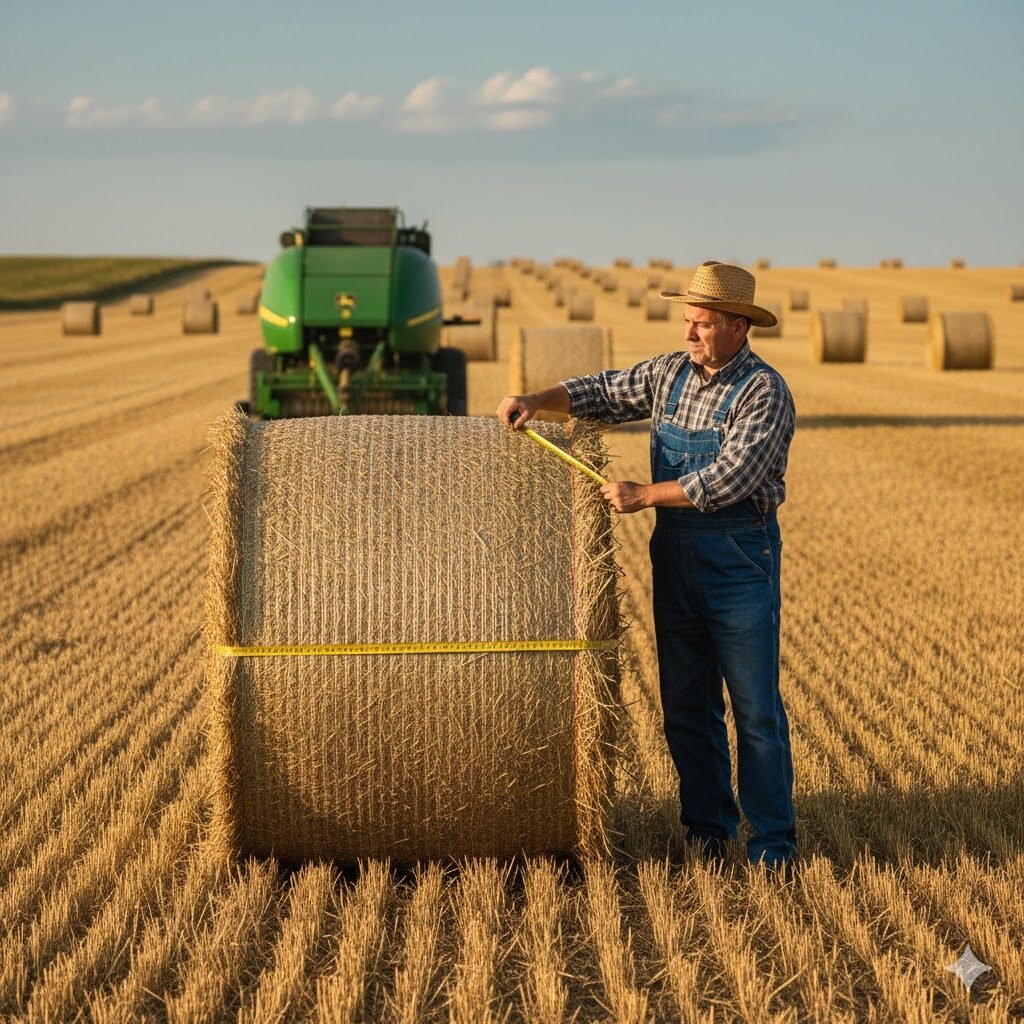
Following these steps gives you a reliable, highly predictable straw bale size. But the final piece of the puzzle is what holds the straw bale together. The packaging you choose directly impacts bale shape, density, and long-term consistency. Check out the next section to learn more.
How net wrap and twine affect straw bale dimensions
Straw bale dimensions don’t depend only on the baler. Packaging plays a big part too. The material you use, twine or net wrap, can tighten the bale, shape it, or even distort it if the tension isn’t right. That’s why professional straw sellers choose wrapping methods that keep every bale uniform, stable, and easy to stack.
Here’s why modern sellers increasingly choose net wrap over twine:
- Better shape retention: Plastic net wrap holds the bale more tightly, resulting in cleaner edges and more consistent dimensions.
- Higher bale density: Bale net wraps compress the outer layers evenly, helping you ship more material per load.
- Stronger UV resistance: Essential for Australia’s hard sunlight and open-field storage across Europe.
- Full edge-to-edge coverage: Protects fibres, prevents unraveling, and keeps bales neater during handling.
- Faster baling than twine: Fewer revolutions, quicker wrapping cycles, and less downtime in peak season.
- Reduced leaf and chaff loss: Netting traps more material, especially valuable for fragile straw.
- Uniform stacking dimensions: Consistent bale sizes make it easier to plan pallets, barns, and truckloads.
What is the best net wrap for straw bales?
If you are selling straw, you already know that buyers love consistency. That means clean edges, tight shape, and bales that don’t fall apart mid-lift. So, what is the trick? It is as simple as using a high-quality bale net wrap. It helps achieve cleaner, denser bales that load faster and ship more safely. For the best straw bale net wrap solutions, XES Bale Nets is the trusted brand. Our wraps give consistent edge-to-edge bale coverage, UV resistance against harsh sun, and a better hold to reduce chaff loss. They suit European loads and long Australian hauls.
1. XES® Classic Bale Net Wrap
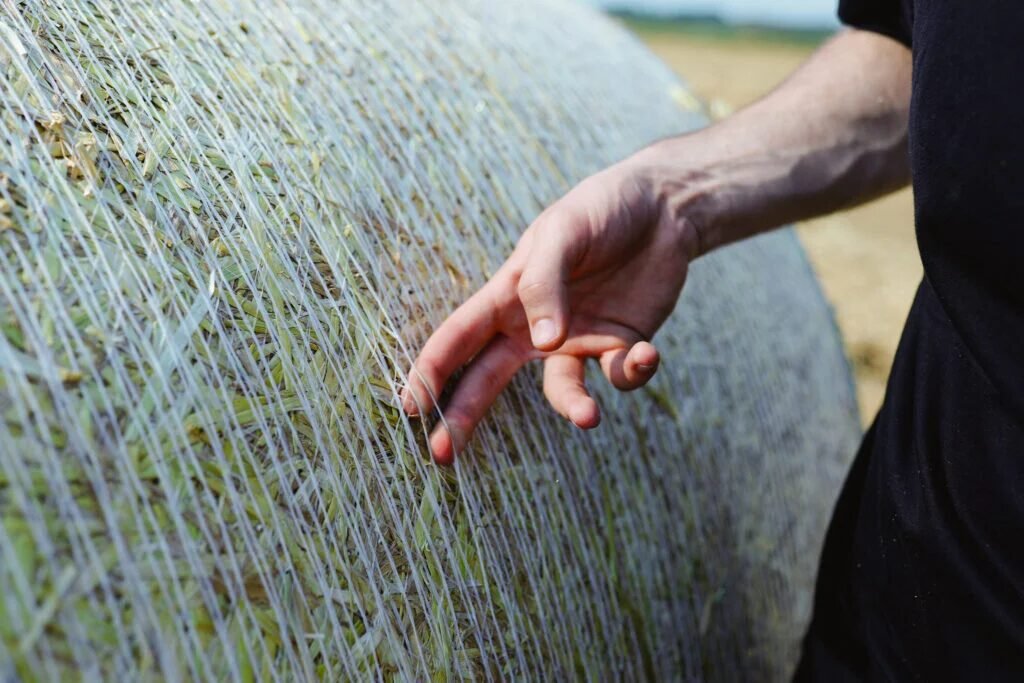
XES® Classic Bale Net Wrap is designed for everyday baling in stable weather and moderate storage conditions. It delivers clean, consistent bale coverage, easy handling, and reliable performance for farmers who want dependable results without unnecessary complexity.
Key features
- Standard-grade durability: Built for regular baling conditions, this wrap offers steady performance that maintains bale integrity during short-term storage and local transport. Ideal for farms needing a reliable wrap without extra heavy-duty features.
- Edge-to-edge coverage: Provides full-width protection that covers the entire bale surface, improving shape and reducing fibre loss. This ensures uniform dimensions, especially helpful when stacking or loading mixed batches for nearby buyers.
- UV-stabilised fibres: Offers moderate UV protection suitable for short outdoor exposure. This prevents weakening from sunlight and helps maintain bale structure during routine field operations and same-season storage.
- Smooth roll release: Designed for easy feeding through most balers, reducing snagging and downtime. Consistent roll tension helps maintain predictable wrapping cycles and smoother operation during peak harvest days.
- Cost-efficient performance: The Classic series balances durability and price, making it ideal for farmers who need reliable, practical net wrap that keeps bale dimensions stable without overspending on heavy-duty options.
2. XES® Extreme Bale Net Wrap
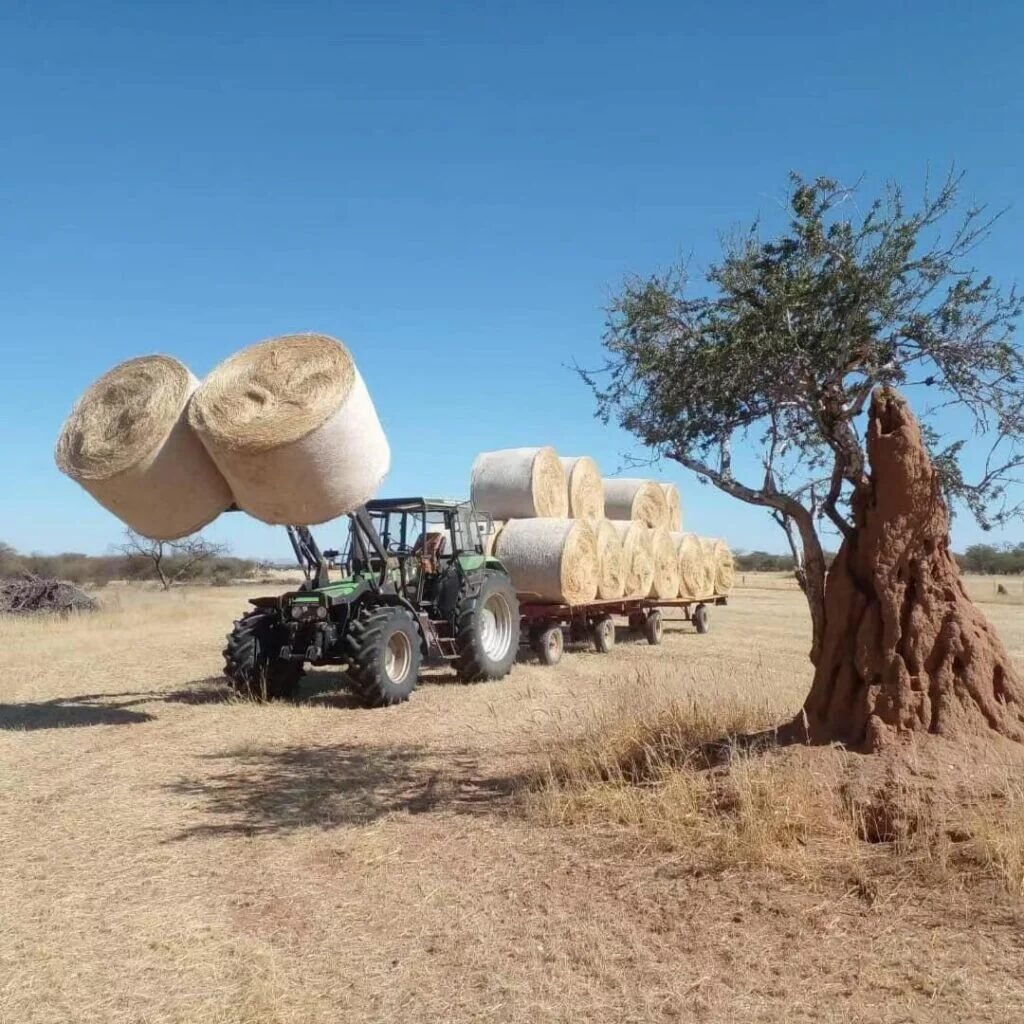
XES® Extreme Bale Net Wrap is engineered for demanding conditions, long-term storage, and intensive transport. It delivers superior strength, tighter compression, and excellent outdoor durability for farms and contractors who need maximum reliability in harsh environments.
Key features
- High-tensile strength fibres: Reinforced material delivers exceptional tear resistance, preventing failures during wrapping, stacking, or transport. Ideal for dense bales or operations requiring maximum consistency across large fields and varied crop types.
- Enhanced UV protection: Built to endure extreme sun exposure, especially in Australia. Extended UV stabilisation prevents fibre degradation, ensuring bales maintain structure and density during long outdoor storage periods.
- Heavy-duty edge locking: Strong edge reinforcement prevents fraying and maintains uniform compression. This improves bale shape and reduces the risk of distortion, vital for export loads and long-distance haulage.
- Fast wrapping performance: Designed for rapid baling cycles with fewer revolutions per bale. The smoother roll pattern reduces downtime, making it ideal for contractors working under tight harvest deadlines.
- Superior dimensional stability: Provides exceptionally consistent compression, improving stacking accuracy and transport reliability. This reduces shifting, saves space, and allows better planning for large-scale barn or truck storage.
3. XES® Supreme Bale Net Wrap
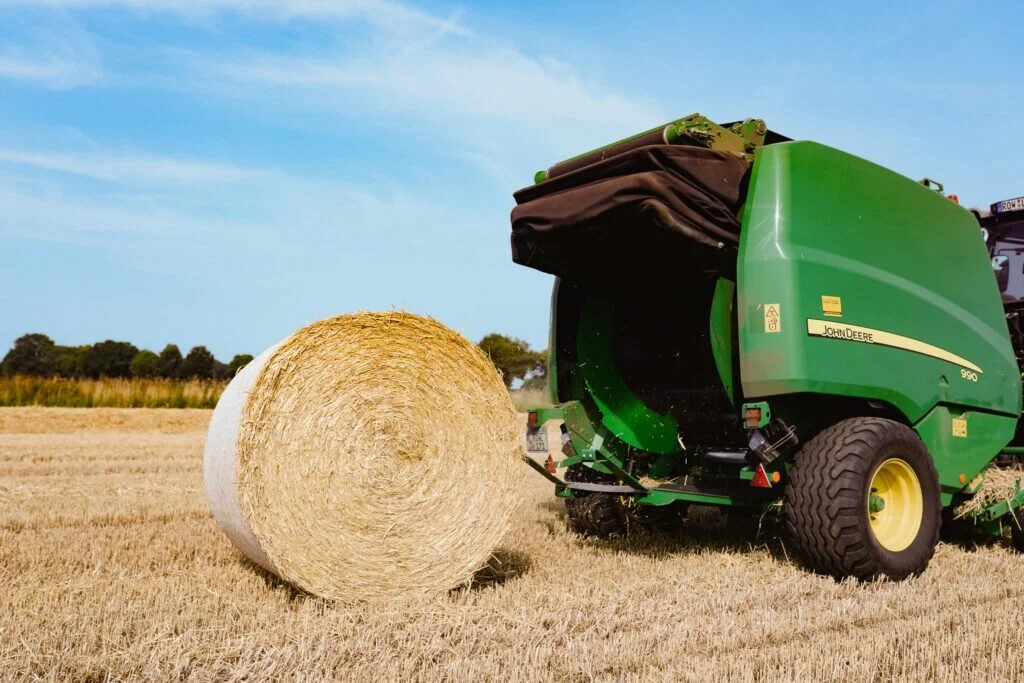
XES® Supreme Bale Net Wrap is our top-tier solution for sellers who demand premium performance. Built for maximum density, exceptional durability, and high-volume export loads, it’s engineered for the toughest baling, storage, and long-haul transport conditions.
Key features
- Ultra-high-density compression: Designed to deliver the firmest bale structure, supporting superior stacking stability and reduced chaff loss. Perfect for export, commercial buyers, and farms needing the strongest possible wrap-to-density ratio.
- Maximum UV resistance: Engineered for the harshest climates, including extended Australian sun exposure. Its advanced UV stabilisers protect fibres longer, ensuring secure bale integrity even during prolonged outdoor storage.
- Reinforced edge-to-edge coverage: Offers strengthened borders that maintain perfect bale shape and minimise distortion. This feature ensures tidy, uniform bales suitable for retail pallets and strict export sizing requirements.
- Industrial-grade tear resistance: Built for heavy handling, loader grabs, and rough transport conditions. Its superior tear resistance limits failures, making it a dependable choice for contractors handling thousands of bales per season.
- Optimised for high-speed balers: Designed to maintain consistent tension and smooth feed at high baling speeds. This boosts productivity and reduces wrapping errors during peak harvest operations in large-scale farming environments.
FAQ
- What is the difference between straw and hay bales?
Straw bales are made from grain stalks, while hay bales are made from leafy forage crops for feeding livestock. Straw is mainly used for bedding, construction, or gardening, while hay is mostly used for animal feed. For cleaner, denser straw bales, XES® net wrap offers strong compression and edge protection.
- How many kg is a bale of straw?
It varies. A straw bale can weigh anywhere from 15 kg to over 600 kg, depending on size and density. Small 2-string bales weigh the least, while large square bales weigh the most. For sellers and buyers, the weight can sometimes vary depending on the order details. Using XES® Bale Net wrap helps maintain consistent weight and density per bale.
- Why is straw more expensive than hay?
Straw can be more expensive due to baling costs, storage demands, market shortages, or high demand for construction and bedding. Its price often reflects the effort required for handling and transport. Using XES® net wrap can preserve bale quality and reduce waste-related losses.
- What happens if straw hay gets wet?
Wet straw can grow mould, swell, or start decomposing, reducing quality and increasing fire risk. Moisture also distorts bale dimensions. You need high-quality wraps like XES® net wrap, which improve weather protection during handling and short-term storage.
- How to prevent straw bales from rotting?
Keep straw dry, stacked off the ground, and well-ventilated. Use breathable covers or indoor storage to control moisture exposure. Strong edge-to-edge net wrap like XES® helps maintain shape and resist damage.
- How long do straw bales last in storage?
Straw bales generally last 6 to 12 months indoors and less outdoors if unprotected. Proper wrapping, ventilation, and moisture control extend their lifespan. For example, using XES® net wrap supports longer structural stability.
- What are straw bales used for?
Straw bales are used for animal bedding, construction, insulation, erosion control, mushroom farming, gardening, and decorative displays. Sellers benefit from consistent dimensions when supplying retailers, stables, or landscapers. XES® wrap helps create professional-grade bales for diverse markets.
- Why do straw bale sizes vary between regions?
Local baler models, customer preferences, climate, and transport rules influence common bale sizes. Europe often uses large squares, while Australia favours big rounds and high-density squares. Standardizing wrap quality with XES® improves consistency across regions.
- Do straw bales shrink over time?
Yes. Bales may shrink due to moisture loss, settling, or weak compression. Net wrap reduces shrinkage by maintaining firm tension and preserving structural integrity throughout storage.
- What is the best way to store straw bales outdoors?
Store on pallets, keep rows tight, use breathable covers, and orient bales for maximum runoff. High-UV net wrap, such as XES® Extreme or Supreme, provides essential protection for straw exposed to long-term storage.
- Are straw bales suitable for long-distance transport?
Yes, if they are tightly wrapped, well stacked, and uniformly sized. High-density bales hold up best during shipping. XES® net wrap helps produce stable, secure bales for long transport across the EU and Australia.
- Can I wrap straw bales with net wrap instead of twine?
Absolutely. Plastic net wrap produces stronger, cleaner, and more uniform bales than twine. It reduces leaf loss, speeds baling, and improves overall bale shape. XES® offers wrap options for all climates and bale sizes.
- How tightly should straw bales be wrapped?
Wrap them tight enough to maintain shape but not so tight that the baler strains. Correct tension ensures firm compression and uniform dimensions. XES® net wrap delivers smooth, consistent tightening for reliable results.
Conclusion
Straw bale dimensions influence everything, from stacking and storage to transport, pricing, and customer satisfaction. With the right baler settings, consistent field practices, and premium net wrap, every bale can be predictable, stable, and ready for buyers. If you want cleaner edges, tighter shapes, and bales that stack perfectly every time, upgrade to XES® bale net wrap and give your customers the consistency they expect.